


178. Literature Search – Then and Now | 文獻搜尋時光之旅
Musings of Dr. Jamie C. Hsu, 12.16.2025
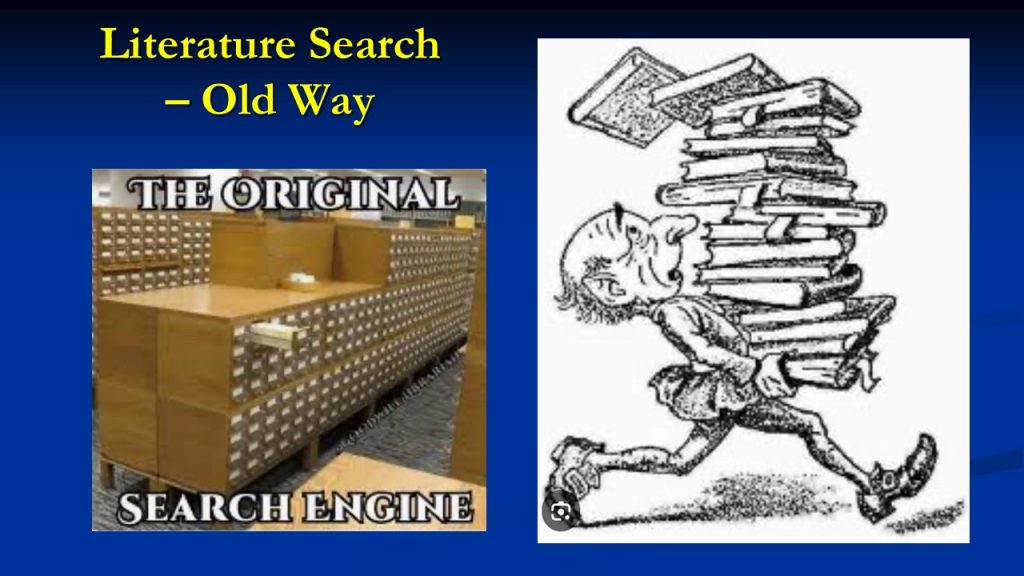
When I came to the US as a graduate student research assistant, my first assignment from the professor was to do a literature search on the research topic we planned to work on. I spent days and weeks in the library, searching through card catalogs, finding relevant journals, and carrying them to the Xerox machine to copy the pertinent articles. Sometimes, I had to go to different libraries to get the relevant technical journals and references. It was both intellectually and physically demanding work. After several months’ effort, we finally got a good sense of what had been done in that particular research field and could decide if it was worthy of further research. That was how I was exposed to the world of literature search decades ago.
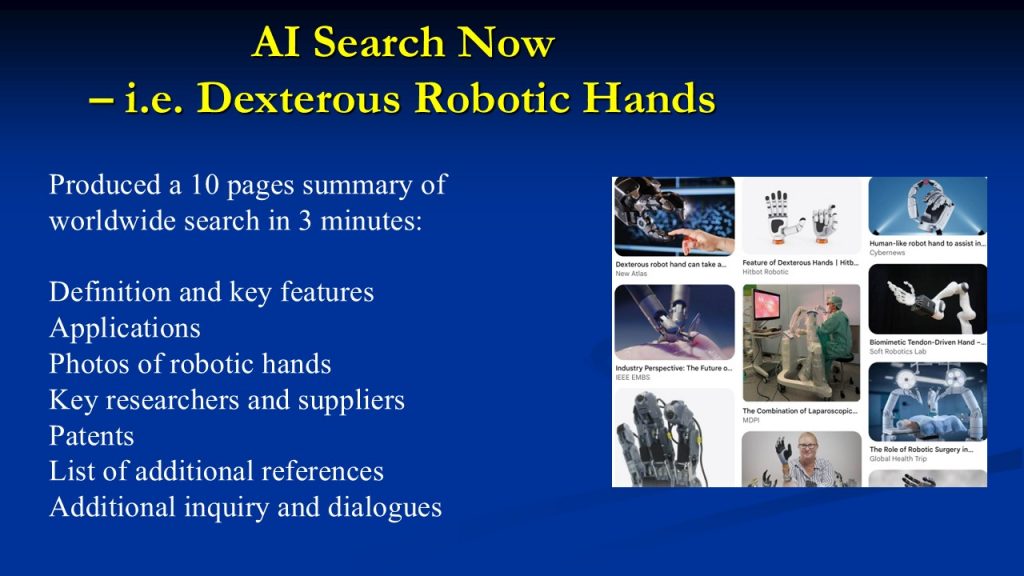
Fast forward to the present, and I am doing some consulting work with several research institutes. The researchers write proposals for areas of value to the company and to society. Out of curiosity, I used an AI tool to do a quick search on the topic of robotic dexterous hands to get up to speed for discussion. Amazingly, the AI tool gave me a ten-page summary in three minutes. The summary included definitions, key features, existing and emerging applications, major researchers in the world, patents granted, and a list of published references. The AI tool even allowed me to interact with it and ask additional questions and request data. What a sharp contrast between the old and new ways of literature search! But questions remain: Are these results accurate and credible? Are we getting the intrinsic learning from a more detailed, laborious manual search? The process of laboring, exploring, learning, and knowledge accumulation may not be as straightforward as gaining and reading a nicely formulated report.
It is obvious that we have benefited from AI’s vast and speedy way of scanning the information landscape and kick-starting a new way of literature search. Yet we need to be mindful that most of this is interpolation of existing data; it does not do much extrapolation beyond what is already available. We should not fall into the pit of mindless searching, streaming, and information gathering, regardless of how convenient it might be.
It still requires human ingenuity and creativity to explore, experiment, and discover innovative solutions to better our lives. Let us learn how to navigate the new hybrid world of AI and HI collaboration.
文獻搜尋時光之旅 (2025/12/16)
-作者 許俊宸博士
-中譯 薛乃綺
當年我以研究助理的身分赴美攻讀研究所時,教授交給我的第一項任務,就是針對我們準備投入的研究主題進行文獻回顧。於是,我一連好幾天、好幾週泡在圖書館裡,翻找索引卡、搜尋相關期刊,再抱著厚重的期刊一路走到影印機前,把重要的文章一篇篇複印下來。有時還得在不同圖書館之間來回奔波,只為找到那幾本關鍵的技術期刊與參考資料。那真是一份既燒腦、又費體力的工作。幾個月下來,我們才逐漸拼湊出該研究領域的全貌,並判斷這個主題是否值得繼續深入研究。那,就是我數十年前初次踏入「文獻搜尋世界」的方式。
時光快轉到現在,我正在為幾家研究機構提供顧問服務。研究人員會針對對企業與社會具有價值的領域撰寫研究計畫。出於好奇,我嘗試用 AI 工具快速搜尋「機器人靈巧手(robotic dexterous hands)」這個主題,好讓自己能迅速進入討論狀態。結果令人驚嘆——短短三分鐘,AI 就產出了一份長達十頁的摘要,內容涵蓋定義、關鍵特性、既有與新興應用、全球主要研究者、已核准的專利,甚至還附上完整的發表文獻清單。更厲害的是,我還可以直接跟它互動,隨時追問補充資料。新舊文獻搜尋方式的差異,真是判若雲泥。
但問題也隨之而來,這些結果真的準確、可信嗎?我們是否還能從這種高速直送的搜尋方式中,獲得過去那種透過細緻、耗時的人工查找所累積的深層學習?在摸索、嘗試、學習與知識累積的過程中,或許並不像閱讀一份整理完善的報告那麼直線、那麼輕鬆。
不可否認,AI 以其龐大且高速的資訊掃描能力,確實讓我們受益良多,也為文獻搜尋開啟了全新的起點。然而,我們仍需保持警覺:這些成果多半是對既有資料的重組與內插 (interpolation),對於真正跳脫現有框架的外推 (extrapolation),其實幫助有限。再怎麼方便,我們都不該掉入「無腦搜尋、無限滑動、瘋狂蒐集資訊」的陷阱。
終究,探索、實驗, 與發現能真正改善人類生活的創新解方,仍然仰賴人類的巧思與創造力。讓我們學習如何在 AI(人工智慧)與 HI(人類智慧)協作的全新混合世界中,找到最佳的前行方式。
