


176. Year-End Inventory of Your Financial and Emotional Accounts | 年終銀行帳戶盤點,別忘了情感帳戶也需要整理
Musings of Dr. Jamie C. Hsu, 12.05.2025
It is near the end of the year. This is the time when we are often advised to take inventory of our financial status—the credit card balances, bank accounts, and investment portfolios. We are told to eliminate high-interest debts on our credit cards and put enough money into short-term market accounts to satisfy the requirements of our cash flow and emergency reserves. And because of the changing market conditions, we should rebalance our investment portfolios in bonds and stocks based on our risk tolerance.
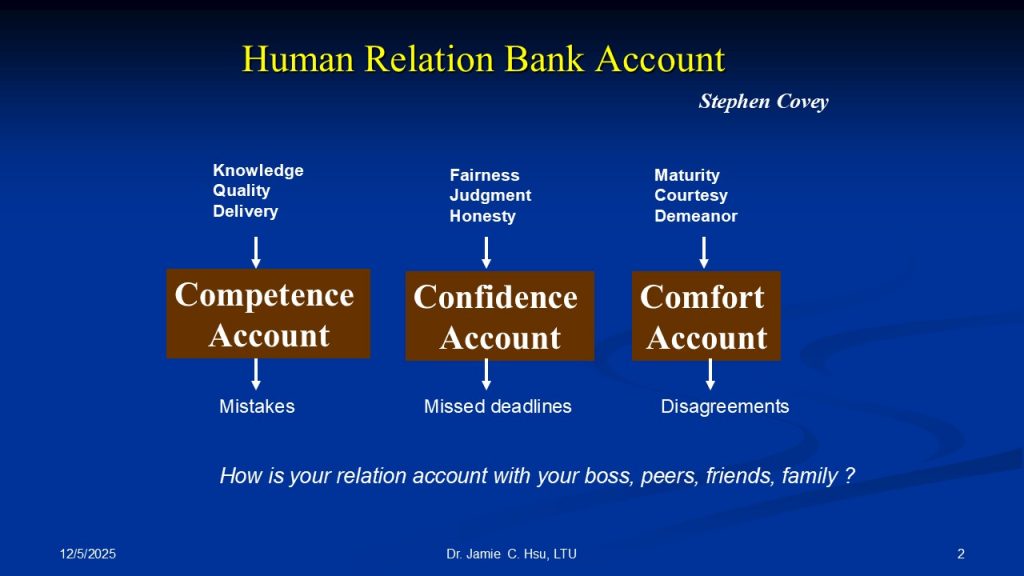
While this year-end financial inventory and adjustments are important and commonplace, we often neglect an especially important account in our lives: the “emotional or relationship account.” It does not involve money but includes the emotions and feelings generated by our interactions with others. These accounts may not be visible and are not stored in the bank, but they are kept consciously or unconsciously in our memories.
Throughout our lives, we constantly interact with others, make impressions, and build relationships. Such interpersonal relationships either add to or subtract from the feelings we have for each other[1] . That is the invisible but important “emotional account” we need to manage.
We make deposits and withdrawals in these accounts every time we have interactions with each other. Positive interactions —acts of kindness, showing appreciation, offering support — are considered deposits that build trust and strengthen emotional connection. Negative interactions — criticism, breaking promises, neglecting others’ needs —are considered withdrawals that diminish the account balance. Good human behaviors and attitudes will help keep most of our accounts in the positive range.
More importantly, we should examine closely the accounts we hold with the most important people in our lives; our family, our boss, and our close friends. For example, have you missed an important deadline at work and put the project in jeopardy? Did you say something to put down your child’s effort after they failed at something? Did you forget your wedding anniversary dinner engagement? Those are big withdrawals from your relationship accounts. But you have ways to deposit and replenish these accounts. Did you spend a week taking care of your ailing spouse? Did you work overtime to rescue a failing proposal? Did you have a special day out with your child?
Depending on the severity of the withdrawals and the value of the deposits, your accounts with these people may be full, half full, empty, or even in the red. It is time to do a mental check of these emotional accounts. Better yet, have a heart-to-heart discussion with the important people in your life and seek ways to have healthy emotional/relationship accounts, just like your well-managed financial accounts.
年終銀行帳戶盤點,別忘了情感帳戶也需要整理 (2025/12/05)
-作者 許俊宸博士
-中譯 薛乃綺
年關將近,又到了一年一度整理生活清單的時節。這時我們常被提醒要檢視自己的財務狀況:看看信用卡餘額是否失控、銀行帳戶是否足以應付日常與緊急需求,還要依照市場變化與風險承受度調整投資組合。這些例行的年末財務盤點,確實重要,也早已成為習慣。
但在忙著整理財務時,我們往往忽略了一個同樣重要,甚至更能影響生活品質的「帳戶」—那就是「情感帳戶」或「關係帳戶」。它跟金錢無關,卻與我們與他人之間的互動所累積的情緒、信任與連結息息相關。這些帳戶看不見、摸不著,不會出現在任何銀行系統裡,但都確實存在我們的心裡,不論是否刻意記得。
生活中,人與人之間的每一次接觸,都會留下印象,也悄悄影響著關係的走向。這些互動會替彼此的情感帳戶加分或扣分,我們在不自覺中,一直都在為這些帳戶「存款」或「提款」。例如:
- 一句關心、一次感謝、一個在意別人的舉動,就是情感存款,能累積信任。
- 一句不經意的批評、一個跳票的承諾、一次忽略他人需要,就成了情感提款,使帳戶餘額下降。
良好而真誠的態度,往往能幫助我們讓大部分的情感帳戶保持在正向的狀態。尤其值得注意的是,與生命中重要的人—家人、伴侶、主管、親密朋友之間的帳戶,更需要我們細緻地檢視。回想一下:
- 是否曾因錯過重要的工作期限而影響他人?
- 是否對孩子的努力做出過於嚴厲的評語?
- 是否忘記了一個重要的家庭約定?
這些都是「大筆提款」。但同樣地,我們也有能力在這些帳戶中重新存款:
- 曾經花時間細心照顧生病的家人?
- 曾努力補救一件棘手的專案?
- 或是安排了一段難得而專屬的親子時光?
提款與存款的多寡不同,這些帳戶可能是飽滿的、半滿的、偏低的,甚至亮起了提醒我們注意的紅燈。這正是整理心情、盤點情感帳戶的好時機。
如果可以,不妨找個合適的時刻,與生命中重要的人聊一聊,一起理解彼此的感受與期待,讓這些情感帳戶更加健康而有韌性。就像妥善管理財務能帶來踏實感,照顧好情感帳戶,也能讓生活更穩定、更有溫度。
